Archive | Health Care

TV Spot for Memorial Physician Services

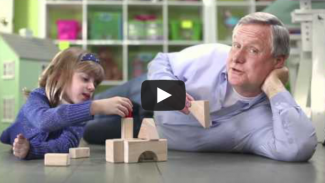
We recently developed a mixed media campaign for Memorial Physician Services (MPS), an affiliate of Springfield, IL-based Memorial Health System. The beautifully-shot 30 second spot conveys a clear message: that MPS doctors are more than just doctors; they’re personal guides to great health.

Several different scripts were presented to Memorial Health System. Their marketing department, physicians, and staff chose the script you see in the video. It was a complex shoot, but efficiency allowed us to both shoot and edit into a final polished spot within one week. At Demi & Cooper, we take pride in using technology to our advantage. It used to be producing a spot that looked half has good took twice as long. No longer!

Wondering what Demi & Cooper can do for you? Drop us a line!

Posted in Advertising, Health Care, Our Clients, video0 Comments

Infographic: Health Apps Will Skyrocket in the Next Three Years

Smartphone and mobile app use is skyrocketing, and recent data proves it. Smartphone owners are increasingly using smartphones in their daily lives, so a natural connection is using them to manage their health. We created the below infographic, which points out that smartphone owners are hooked, and they are increasingly using their smartphones for health information. In fact, 1 in 5 has at least one health app on their phone.

The infographic concludes that in the next three years, health app use will skyrocket. Now is a great time for hospitals and those in the health industry to get on board. Click the infographic for a larger view.
Learn more about creating a branded app for your hospital.

Posted in Health Care, Mobile, Social Marketing, Social Media0 Comments

Top 6 Reasons a Hospital App Is a Must

ICE AppWith the increasing popularity of smartphones, brands everywhere are either releasing apps or wondering if they should. The health sector has even dubbed a whole new industry “mHealth” because of the potential smartphones offer. If you are a hospital marketer, does it make sense to create an app now? Stats and facts seem to say a resounding yes. Here are six arguments for hospital health apps.

1. Like, everyone has a smartphone. In the past few years, the smartphone market has exploded. Over half of adults who own cellphones have smartphones. According to Strategy Analytics, from 2011 to 2012, smartphones in use jumped 47%, surpassing 1 billion.

2. Even more people will have smartphones tomorrow. Strategy Analytics predicts that the next billion smartphones are predicted to be in use by 2015. So over the next few years this hot trend will be even hotter.

3. People are increasingly use phones for health.
Pew Research Center discovered that of cell phone owners, 1 in 3 have used it for health information, compared to only 17% in 2010. And when we narrow it to smartphone owners, a full 52% gather health information on their phones. So as smartphones grow in popularity, even more people are likely to be looking up health information on their phones. A survey by Price Waterhouse Cooper confirms consumer expectations: 6 in 10 patients expect mHealth will significantly change how they find information on health issues in the next 3 years.

4. Put your hospital in front of consumers every day. People with smartphones are hooked—a survey by Harris Interactive found that 63% of females and 73% of males don’t go an hour without checking their phones. And as the population ages, smartphones will become even more important—from a Cisco survey, 90% of those 18-30 years old check their smartphones as part of their morning routine. Creating a great app will allow consumers to wake up with your brand in the morning, and be in front of them throughout their day.

5. Position your brand as technology-forward. People expect their phones to help them with their health. According to Pew Research Center, 1 in 5 smartphone owners have at least one health app on their phone. If you can create a usable app, people will download it, and they will see you as high-tech and helpful.

6. Apps can be simple to create and highly usable.
And now to clear the roadblocks. Think of a simple idea, and it can be simple to create. App developers and interactive agencies can hear about your idea and let you know what will and won’t work. Now for the usability roadblock—will people download it and never use it? This won’t happen if your idea begs for daily use. Consider an app several hospitals have branded for their own hospital called the ICE App. This app puts your hospital logo on a person’s home screen, along with an in-case-of-emergency phone number, so first responders can see who to contact. Once users download the app and set up the lock screen, you are the first thing they see when they turn on their phones. Learn more about getting the ICE App for your hospital.

The stats are screaming an argument for your hospital to release a branded app. What’s stopping you?

Sources:
“Mobile Health 2012″, Pew Internet and American Life Project, Pew Research Center
“Worldwide Smartphone Population Tops 1 Billion in Q3 2012″, Strategy Analytics
Harris Interactive, June 2012
“Generation Y: New Dawn for Work, Play, Identity”, Cisco 2012
“Emerging mHealth: Paths for growth”, PWC 2012

Posted in Health Care, Mobile, New Technology, Tech tips0 Comments

Watch our HDTV spot for Memorial Orthopedics

In this television spot for the Memorial Medical Center (Springfield, IL) Orthopedics department, designed as part of an overall campaign, six adults use their hips and knees during various everyday activities. They get some multitasking in as well. While the activities are performed, each person explains why Memorial Orthopedics is the most experienced in the region.

Posted in Advertising, Demi & Cooper Advertising, Health Care, Our Clients, video0 Comments

How Has our ICE App Been Doing?

We love to talk about our ICE App. Partly because we created it, but mostly because of how successful it has been. Our app has the potential to save every downloader’s life. Just how many people have downloaded our In Case of Emergency app? Check out the case study on our DC Interactive Group website.

http://www.dcinteractivegroup.com/category/case-studies/

Posted in Branding, Demi & Cooper Advertising, Health Care, Internet Marketing, Mobile, New Technology, Our Clients0 Comments

Google Webinar – Intro to Remarketing

If you’re in marketing, or if your idea of a good time is following privacy issues beyond just those associated with Facebook and Instagram, you’ve certainly heard the phrase “remarketing” in 2012.  From a marketing perspective, remarketing is a dream.  It’s the web world’s automated equivalent of a salesperson getting the phone number of a prospect who visited the “store” in order to contact the person at a later date — except remarketing does not know anything about the person to whom the sales messages will be delivered, other than that the person had visited a coded website, and remarketing simply feeds ads to the prospects as they peruse various websites fed by Google ads.

In a nutshell, once someone visits your site, a code from your site is placed on the person’s browser that allows Google to feed your remarketing ads to the person at a schedule you create.  These can be pay-per-click ads, so it only cost you money if the person clicks on the ad.  Even better is that if, while on your site, the person does what you want him to do (ie purchases, signs up for a class, fills in a contact form, etc.), the remarketing code can be removed automatically.  The thought is, why spend money marketing to someone who just bought?  Then again, your remarketing dollars to that person can be spent on getting a testimonial from the buyer.  Pretty cool, huh?

Here’s Google’s webinar on remarketing.  It’s one hour long, but worth it if you want to understand how it works.

Posted in Advertising, Health Care, Home Building, Internet Marketing, Internet Media, Media, New Technology, Tech tips0 Comments

Doctors Prove That Persuasion Is Best Through Emotions, Not Knowledge

Consumers like to think that they make buying decisions with their heads.  Some are adamant, even without provocation. But advertisers know better.

While at dinner parties and social business events, I’ve had more than one fork of food stall on its way to my open mouth as I tried to digest a stinging comment from someone I didn’t even know about how my chosen profession is “full of bad art without any real purpose”.  “C’mon, you got a couple in separate bathtubs . . .out in the woods . . . holding hands . . . why would anyone in their right mind think that a commercial like that could sell a pill for Erectile Dysfunction?”  My lack of response, coupled with raised eyebrows, is misunderstood as signs that I’m actually looking for another example.

“Or that gecko . . . selling car insurance. . . I know people like the little creature, but how many stupid people are there who would buy insurance because some lizard says they should?” (click this link to see the type of person I’m describing).

Well, a lot of people.  And they’re not stupid.  They’re, well, people.  They’re human, and they react to human things that appeal to the most persuadable parts of their minds — their emotions.  Rarely do we buy based on our intelligent minds.

Successful advertisements aren’t trying to win debates.  They’re not even trying to be logical.  Instead, they’re trying to cut through all of the clutter that has filled a viewer’s mind, connect with a need the viewer has, and associate the product or service with the successful fulfillment of that need.  Logic has nothing to do with this, and neither does passing along valuable knowledge. Indeed, as proven in the medical community, having a whole lot of knowledge about a subject has nothing to do with how a person views the subject.

In research published by the Journal of Internal Medicine titled “Healthcare and Lifestyle Practices of Healthcare Workers: Do Healthcare Workers Practice What They Preach?”, it was shown that the lifestyles of healthcare workers were basically no different than the general population when it came to important medical concerns like weight control, binge drinking, and cigarette smoking.  Amazing, right?  Despite all of the facts and knowledge they have on these subjects, and all of the deadly reminders they see daily, healthcare workers act, in general, no different than those with much less knowledge of the dangers of these lifestyles.  They’re fat, drunk and stinky just like everyone else.

Clearly, knowing the facts doesn’t sway people.  Knowing that 60-something % of smokers will, in fact, die from smoking doesn’t stop people from smoking — not even healthcare workers.  These people are choosing to follow unhealthy lifestyles, despite knowing clearly the risks they are taking.  The decisions they make have nothing to do with knowledge.

What persuades people, what overrides all logic and rationale thinking in the minds of all people, is when a clear message gets wrapped up in an emotion that resonates within the population. How else can you explain a brand of flavored carbonated water selling for five times the price of a no-name brand?  Logically, it’s just a drink; but emotionally, it’s so much more.  Indeed, it’s “The Real Thing,” whatever that means.

“We’ve taught over 10,000 people how to play the piano in just three months!” has nothing on “Everybody laughed when I sat down at the piano, but then I began to play . . .”  One gives facts — big, ho-hum facts.  The other hits an emotional nerve — “man, I’d love to impress people by playing the piano.”

All advertising, including healthcare, connects better with the audience when it involves emotion.  “Our Retina Center Has More Modern Technology Than Anyone In The State” cannot compete with “Jimmy’s Parents Feared That He Would Never See Again. Then They Saw Us.” I was able to add even more emotion, and thus more power, to the second headline by simply adding a child.  “More Technology” is a brain phrase for “better”.  However, “Fear” is an emotional word for “do something”, which really is the point of the ad.  The first headline explains.  The second headline gives hope. People react to hope.  They want opportunity.  They don’t want knowledge because they really don’t know what to do with it.  And I think the health habits of our medical community prove this fact.

Maybe the next time I’m confronted at a dinner party, I’ll point out that the Erectile Dysfunction ad was aimed at men, giving them hope by talking to their pleasure centers.  I’ll then ask my “friend” if he would prefer that the ad say honestly and factually,  “This pill has thrilled millions of men and, at the same time, aggravated millions of wives”.

Nah.  Let them believe they buy using their brains.  We advertisers know better. I’ll just try not to choke on my food when the subject comes up.

Posted in Advertising, Demi & Cooper Advertising, Health Care, Home Building0 Comments

Infographic: Rising Use of Social and Mobile in Healthcare

For the past several years, the use of social and mobile in the healthcare industry has been on the rise. Social media and mobile phones have become an integral part of our lives, and social and health seem to have a natural connection. People like to research their own health—they have been since the Internet made this easy. And now they are starting to share opinions with others, ask for advice, and search for information on the go.

Smart hospitals are starting to catch on, implementing social media programs that help to brand, manage reputations, and provide helpful, reliable information to these consumers.

In the below infographic, we examine recent research from several sources that tells a story: Patients of all ages are increasingly using social and mobile sites to listen to and engage with others who are talking about health. Hospitals who are not currently participating in the conversation should be.


If you’d like to implement a social media program for your hospital but aren’t sure how to get started, contact us!

Posted in Branding, Health Care, Social Marketing, Social Media0 Comments

Things to Consider When Creating a Branded App, and Why Our ICE App Works for Hospitals

It seems like everyone has an app idea. Especially if you work in your organizations marketing department, you have probably been approached by staff, board members, and other colleagues who claim to have the next great app idea for your company. But according to a recent Forrester Study, “Mobile Apps for Marketing,” branded apps aren’t for everyone—and they require a great deal of thought when creating them to be sure they are worth the effort.

A few years ago we created the ICE App as a branded app for hospitals. The app allows people to add a banner to their mobile phone home image that includes an In Case of Emergency phone number, so first responders can easily see who to call if someone has an accident or medical emergency, without having to open a person’s phone and search contact information. The app is offered by hospitals free for user’s to download. The branded portion of the app: next to the emergency number is the hospital’s logo.

So just what should you consider when evaluating your branded app idea? A few thoughts from Forrester follow, as well as a close evaluation of how our ICE App for Hospitals measures up:

Audience skews younger. Almost 2/3 of app users are Generation X and Generation Y. 19% of those 56 to 66 use mobile apps. So if your app is geared toward a younger crowd and you are aiming to reach those up to 55, you are more likely to find success.

  • ICE App Evaluation: Ideally a hospital would like to reach the older generation also, but the younger generation does have health issues. And reaching Generation X, who is getting older, is great. These people also may be making health decisions for the older generation. As far as app content goes, anyone can have an emergency, and Generation X is increasingly aware of this.

The best apps enhance brand experience or build loyalty. Most people who will download your app are aware of your brand and like it before they do so. The app shouldn’t try to do the job of introducing your brand—it should be helpful and provide a reminder of who your company is.

  • ICE App Evaluation: The ICE App is not out of the blue—it makes sense for hospitals. It certainly provides a valuable service to the users, making them prepared in case of an emergency. It also suits a hospital brand—it is about helping you when you have a health crisis. Users will hopefully become aware of your app through a solid marketing plan, and they will see that you are going out of your way to provide them with tools to better their health.

Create apps people will return to. Research from a Pew study shows once apps are downloaded, people may not open them very often. 68% of smartphone owners open only 5 or less apps one time a week. So your app idea needs to be functional, and something users need.

  • ICE App Evaluation: Users have no choice but to see your brand when they use this app. They download it, set up the picture with their ICE information, and then they never have to open the app again. Your brand with their ICE phone number will appear on their home screen every time they turn on their phone. In terms of shelf life and stickiness, an app can hardly do better.

Learn more about the ICE App and how your hospital can put it to use.

Posted in Branding, Health Care, Mobile0 Comments

Why Healthcare Marketers Should Be Un-Pinterested

UPDATED 9/18/12:  IF YOU READ THE POST ALREADY, SKIP TO THE UPDATE AT THE BOTTOM.

Many healthcare marketers like to throw things at the consumer wall to see what sticks. It’s not a bad practice, especially when you really analyze what sticks in order to improve the effectiveness and efficiency of your marketing. In fact, we do the same thing.


Let's see: Recipes. Hair styles. Inspiring quotes. And hospitals?

One marketing idea we threw at the wall was a video about the day in the life of a therapy dog. The question at the time, and this was a few years ago when Flip Cameras were just starting to gain in popularity, was whether videos drew people to our clients’ websites, and whether this subject matter had any traction. Well, this video stuck better than we expected, quickly turning into one of the more popular videos we produced at the time thanks to our posts in social media and our eblasts linking to the video, and drawing not only the local market to our client’s site, but people from around the country.

What we threw at the wall those many years ago took some time to coordinate, produce and market. It wasn’t easy, which made it important for us to know whether this activity drew a strong enough response to warrant future attention. But from the results, it was clear that videos needed to be a big part of our social media future. And to this day, they are.

And now we have Pinterest which is, like videos years ago, still in its infancy and still being analyzed to see if and where it fits into a marketer’s toolbox–regardless of what industry is being marketed. Some businesses seem to fit perfectly with Pinterest (like our client Seigles, who sells kitchen cabinets and has beautiful photos that are desirable to anyone looking to create a new kitchen), so it makes perfect sense to continue to throw their images on the Boards at Pinterest (even though it is very hard to tell if there’s any real success). But Pinterest for hospitals–who in the world thought this was a good tool for hospitals to use to promote their services?

Well, based on all the information I’m seeing, just about everyone thinks Pinterest is great. The site is so sexy, so trendy, so attractive, and so easy to work with, that it doesn’t matter to most if those Boards that healthcare marketers are throwing at the wall are actually sticking. Healthcare marketers are creating Pinterest accounts in droves, joining webinars to learn how to capitalize on it, and pinning whatever seems to fit both the site and the hospital’s purpose. Clearly, nobody fears their jobs will be in jeopardy if they have a board on Pinterest.

While posting to Pinterest will almost certainly not harm a hospital’s brand, there’s no proof that anything hospital marketers pin is adhering to the wall strong enough and long enough to warrant the effort. My own professional opinion is that until they develop a geographic angle on the Pinterest site, or a way to track and work with users, it’s simply not worth the effort for healthcare marketers — even though their female, 25 years and up, demographic is highly desirable.

Right now, a Board on Pinterest is the equivalent of placing an ad in a national publication, but without the media cost. So although a hospital’s Pinterest board might be seen by thousands of (mostly) women and gain followers, the great majority of those followers likely are well outside the hospital’s service area. Quite simply, these pins are appealing to many people who almost certainly cannot be patients at the hospital. Hospital marketers are giving helpful recipes and exercise ideas to people who cannot impact their bottom line!

Oh sure, it doesn’t take a lot of time for healthcare marketers to pin anything they want, so it might not be seen as a total waste. In fact, that’s the defense presented in this article from American Medical News.

“Holly Hosler, marketing coordinator for LifeBridge Health, a hospital system in Baltimore, said that when several people in the hospital’s marketing department found they were spending a lot of time on Pinterest, they decided to start some on-the-job experimentation. They launched a board in March.

Their activity has mostly consisted of re-pinning content from other places. The content that has done well — and in Pinterest-speak “well” means that several people re-pinned the content — has been educational information about breastfeeding, especially posts that feature a picture of a cute baby to lure users. Hosler said she hopes to add more original content if interest in the site continues.”

But pinning does take a mindset. It requires marketers to have this website in the front of their minds in order to find and pin interesting and relevant subject matter. The Pinterest mindset comes at the expense of other, likely more time-consuming strategies and tactics, that are much more worthy of a healthcare marketers attention. To Ms. Hosler’s credit, her hospital seems to have a very active social media program, including a well fed blog, so this minor effort might be worth the test because it doesn’t come at the expense of other, more important, activities. But most hospital marketing staffs are taxed for time, barely getting to the tasks that really deserve attention. For those professionals, Pinterest should be low on their lists.

Video interviews with specialists, pay per click campaigns, mobile websites, service-line oriented discussion groups, segmented and targeted eblasts, and even basic blogs have already shown that they are permanently stuck to the wall, as they provide excellent returns on the hospital’s investment. But these activities require more thought to conceptualize, more cooperation among staff to coordinate, and more diligence to produce. Sadly, we see very few healthcare marketers tackling these trickier activities with a level of energy and enthusiasm that is worthy of the return they produce. It’s easier to pin, or to look at the pins from others. And few people in the C-Suite have enough knowledge of the marketing value of the Pinterest website to overrule the time that the marketing staff is devoting to it.

Further into the same article, you’ll find this nice summary from Jessica Seilheimer, senior vice president of digital strategy and planning for Euro RSCG Life Metamax, a health care marketing firm:

“Because of this narrow focus, Pinterest isn’t to a point where people are using it to seek out physician practices, Seilheimer said. But others say potential patients could stumble upon a practice’s website because of something that caught their eye on Pinterest.”

“Potential patients could stumble upon a practice’s website”?  I don’t think any client of ours would like to read that statement as the goal in a Creative Brief.  Not while other marketing efforts exist that are proven to actually lead people directly to the site.

So healthcare marketers, skip the hype and skip Pinterest for now.  Instead, take a clear look at the marketing wall and focus your efforts on the things that are clearly glued to it–especially the things that you are currently not doing.

UPDATE:

Okay, I’ve heard from quite a few people who agree with the point of this post, but I also heard from a few who fully subscribe to the whole “we’re just trying it out” idea.  When I ask how many hours a week they devote, they say it’s very little, like 1-2.  When I ask about the results, they say it’s hard to measure. Soooo, I measured for them.  On average, the great majority of hospitals I know who have a Pinterest page have 5 boards with one to five pins in each with maybe 1 or 2 repins of a few pins in each board (and usually those repins are things the hospital has repinned).  Even worse, they average less than 15 followers.

Then along comes this gushing review of the potential of Pinterest when you simply add a human touch.

“Rex Healthcare has been on Pinterest since the first of the year. He said it’s something that everyone in his marketing department is paying attention to. Papagan pins a few times a week. .  .  .  The organization’s goal is to increase its followers, likes and repins. Its Pinterest page has been cross-promoted on Twitter and Facebook. The hospital’s website and blog have navigation buttons for Pinterest. In addition, a Pinterest button will be added to the company’s email signature, along with its other social media platforms.”

Phooey.

So nine months, 18 boards and 358 pins later, Rex Healthcare’s Pinterest page has netted 91 followers.  But a video they posted on YouTube just one month ago already has 1,026 views, and they have a nice active blog and social media program (although I would push to get email addresses much harder on both the main site and the blog, and I wouldn’t allow someone to get an RSS feed of their blog since I cannot track readers through it).

I just don’t get the interest in Pinterest in the healthcare world.  And I’m not the only one.  Marissa Chachra, a a senior advisor with Jarrard Inc., has come to the same conclusion in this recent post, though she still holds out hope that there will be some value.  I do too, but I think it will be more in the area of consumer research rather than marketing to consumers.

Oh, and for the record, I truly enjoy Pinterest — personally.  Pinterest can be used to sell me watches, gardening tools, sports stuff, kitchen cabinets (which we do for Seigles), etc. easily.  But not healthcare.

Posted in Health Care, Internet Marketing, Media, New Technology, Productivity, Social Media1 Comment